Contents (12 sections)
What Are Autonomous Drones?
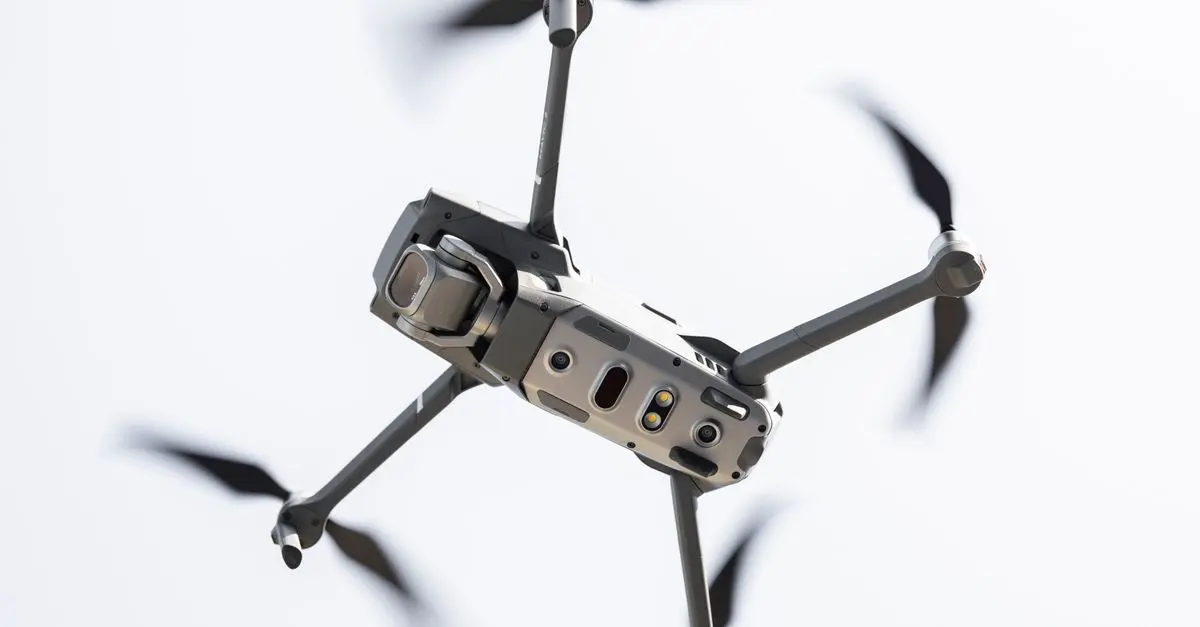
Autonomous drones, also known as unmanned aerial vehicles (UAVs), are aircraft without a human pilot onboard, controlled remotely or operating autonomously through onboard computers. These drones vary significantly in size, shape, and purpose. With the capability to perform tasks independently, they are used across various sectors, from environmental monitoring to delivery services.
Drones have evolved substantially over the years. Early versions were predominantly remote-controlled. However, with advancements in technology, modern drones come equipped with sophisticated systems like GPS, sensors, and artificial intelligence, allowing them to operate without direct human intervention. According to ABI Research, the autonomous drone market is expected to grow to £40 billion by 2026, reflecting their increasing importance in our daily lives.
Moreover, autonomous drones are being used to minimise human error and increase efficiency in operations. Their ability to navigate complex environments makes them invaluable tools in sectors such as agriculture, where they monitor crop health with precision.
How Do Autonomous Drones Work?
The operation of autonomous drones involves a combination of hardware and software systems designed to function seamlessly. These components include GPS for accurate positioning, gyroscopes for maintaining orientation, and advanced sensors like LIDAR for obstacle detection.
Step-by-Step Functionality:
- Mission Planning: The drone's tasks are pre-programmed using ground control software.
- Takeoff: Utilises onboard algorithms to execute a safe takeoff.
- In-Flight Operations: During flight, the drone makes use of real-time data from sensors to adjust its path.
- Data Collection: Aerial imagery or other data is gathered based on the mission.
- Landing: The drone finds a safe landing point, often using vision or GPS-based navigation.
The combination of these elements allows autonomous drones to execute complex tasks without human oversight. Companies like DJI and Parrot are at the forefront of integrating AI into drone operations, pushing the envelope on what is technologically possible.
Comparing Autonomous Drones: Features and Capabilities {#comparing-autonomous-drones-features-and-capabilities}
Here's a comparison of key features across different autonomous drones:
| Feature | Drone A | Drone B | Drone C | Verdict |
|---|---|---|---|---|
| Battery Life | 30 min | 25 min | 40 min | Drone C wins |
| Camera Quality | 4K | 1080p | 4K | Tie |
| Weight Capacity | 5 kg | 3 kg | 6 kg | Drone C wins |
| Range | 5 km | 3 km | 4 km | Drone A wins |
The Impact of Autonomous Drones Across Industries
Autonomous drones are revolutionising several industries. In agriculture, they help farmers by providing precise data on crop health, which can lead to increased yields. In the energy sector, drones are used to inspect solar panels and wind turbines, thus reducing the need for human climbers and decreasing risk.
Additionally, autonomous drones are now pivotal in the logistics domain. Companies like Amazon and UPS are experimenting with drone deliveries, promising to reduce delivery times significantly. Similarly, in the realm of public safety, drones equipped with thermal imaging are invaluable in search and rescue operations, helping locate people in dim conditions.
To underscore their efficacy, 60 Millions de Consommateurs has highlighted drones' role in reducing operational costs and improving accuracy in complex tasks across these sectors.
Expert Opinions on Future Trends
> 💡 Expert Opinion: According to Dr. Sarah Lee, an aeronautics engineer, "The future of autonomous drones looks promising with advancements in AI and machine learning. We are on the brink of drones not just performing tasks but also learning from them, enabling smarter decision-making."
As technology progresses, the integration of autonomous drones with IoT devices is expected to increase, allowing seamless communication and data exchange. This will notably enhance capabilities in urban settings, promising improved traffic management and infrastructure monitoring.
FAQs About Autonomous Drones
- What are autonomous drones used for?
Autonomous drones are used in agriculture, public safety, logistics, and many more industries.
- How do drones navigate?
They use a combination of GPS, sensors, and AI algorithms for navigation and obstacle avoidance.
- Are drones environmentally friendly?
Yes, they often reduce energy consumption compared to traditional methods in various industries.
- Do I need a licence to operate a drone?
This depends on your location and the weight of the drone, so check local regulations.
Glossary
| Terme | Définition |
|---|---|
| LIDAR | A sensor technology that measures distance using laser light. |
| Autopilot | Software responsible for controlling drone flight without manual input. |
| Algorithms | Instructions coded into a computer to perform specific tasks. |
📺 Ressource Vidéo
> 📺 Pour aller plus loin : The Future of Drones: Industry Impacts and Innovations, a thorough analysis of how drones are transforming various sectors. Recherchez sur YouTube : "future of drones 2026 industry impacts innovations".
🧠 Quiz rapide
> 🧠 Quiz rapide : Which sector has NOT been influenced by drones?
> - A) Agriculture
> - B) Fashion
> - C) Logistics
> Réponse : B — While drones are used in deliveries, they are less involved in fashion production.